
Concrete & Heavy Debris Disposal in Cottonwood Heights, UT
Concrete, brick and masonry are dense enough that the physics does the deciding for you. A container that looks nearly empty can already be too heavy to legally move, which is why heavy debris always goes in a small, dedicated box.
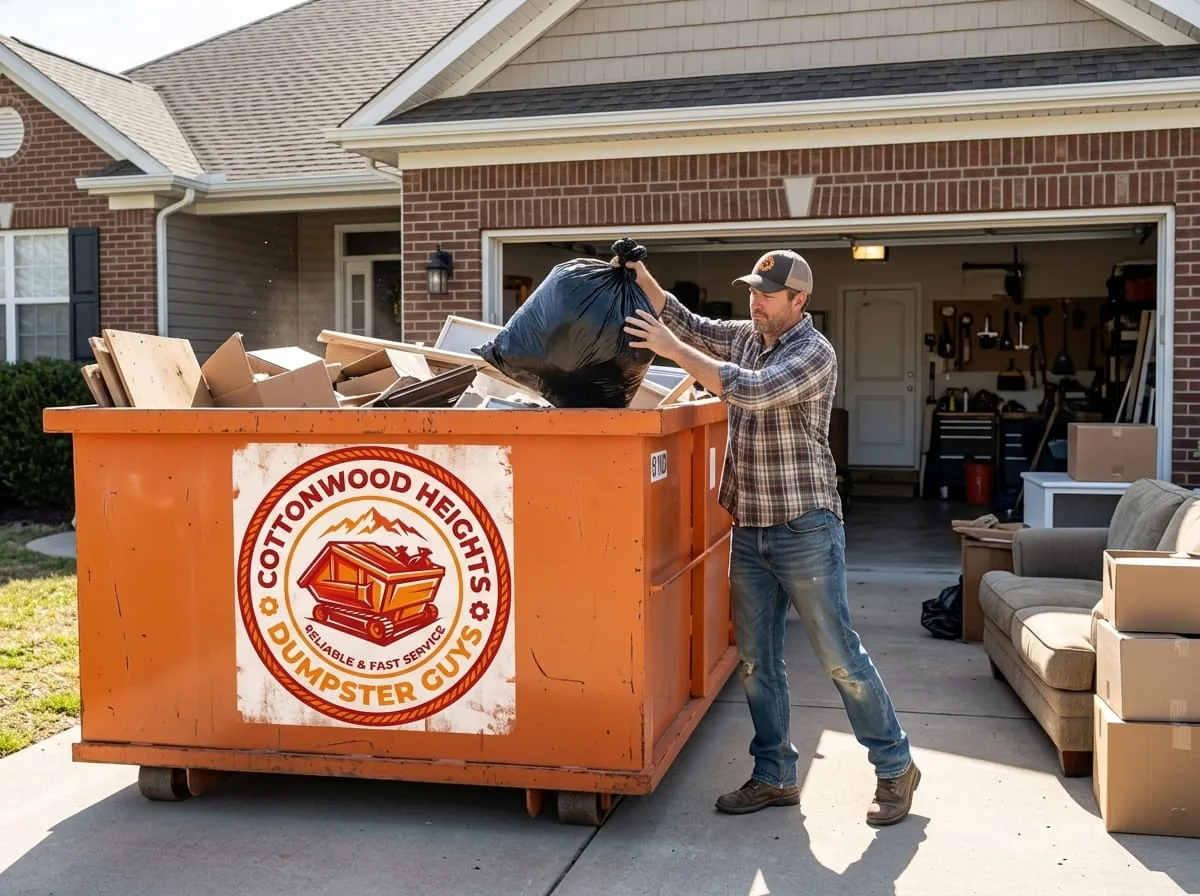
Why heavy debris goes in a 10 yard
Concrete runs to roughly two tons per cubic yard. A 10 yard container filled level with it is already at the legal road weight for the truck carrying it.
Customers regularly ask for a 20 or 30 for a patio or driveway tear-out and are surprised when we decline. A 30 yard filled with masonry could not legally be moved, so it would simply sit on the property until somebody removed material by hand.
For larger demolition we run multiple 10 yard containers or stage them across the job. It is more deliveries, and it is the only way it can be done - especially on a bench lot where a loaded truck already has grade to contend with.
Keep it clean and keep it separate
Clean masonry - poured concrete, block, brick, unpainted stone - can be routed as clean fill or recycled rather than mixed waste, which is both better environmentally and cheaper. But that only works if the load is genuinely clean.
One timber offcut, a run of protruding mesh or a bag of general rubbish in an otherwise clean concrete load and it is no longer clean fill. It becomes mixed debris and the price follows.
Rebar cast inside concrete is normally acceptable; mesh sticking out of broken slabs is not, because it fouls processing equipment. Cut it back flush where you can, and ask before you load rather than after.
How this fits the county's rates
The Salt Lake Valley Landfill charges by material. Concrete and asphalt have their own per-ton rate; clean, dry soil is $12 per ton; but the moment a load is mixed or contaminated it is charged at the $36-per-ton Mixed Trash rate.
For heavy debris that means two things. A dedicated clean-masonry container routes more economically than the same material mixed into general demolition waste. And clean, dry fill kept separate stays on the low soil rate rather than the mixed rate.
The upshot for you is simple: separate the concrete, keep it clean and dry, and let us route it correctly. And as with every load, it leaves tarped to meet the secured-load law.
Stone, soil and excavation
Three related materials that behave the same way. Stone - old foundations, retaining walls, patios - qualifies as clean fill unmixed, and the tonnage in even a modest wall is usually far more than the owner expects.
Soil is heavier than people believe, and it has to be dry to earn the low rate - wet soil is charged at the Mixed Trash rate. On a bench or hillside excavation, that is worth planning around.
Excavation spoil is the most commonly underestimated material we handle. If you are excavating, tell us the cubic yardage and we will work out the number of containers rather than guessing, because the answer is routinely higher than the original estimate.
Where we provide this service
We deliver concrete & heavy debris disposal across Cottonwood Heights and throughout Salt Lake County, plus the surrounding towns in Rockdale, Walton, Morgan, Jasper and DeKalb counties.
Book concrete & heavy debris disposal in Cottonwood Heights
One call gets you a flat rate, an honest size recommendation and a delivery slot.
(801) 346-6111Concrete & Heavy Debris Disposal: common questions
Why can't I have a 30 yard for concrete?
Because it could not legally be transported once loaded. Concrete runs to roughly two tons per cubic yard, so a 10 yard filled level is already at the truck's legal road weight. A larger container would simply sit on your property.
Can I mix a bit of timber in with the concrete?
Better not to. It reclassifies the whole load as mixed debris, charged at the higher $36-per-ton rate. Keep concrete clean - no timber, no protruding mesh, no general rubbish - and it routes as clean fill instead.
Does soil have to be dry?
For the low rate, yes. Clean, dry soil is $12 per ton at the county landfill; wet soil is charged at the $36-per-ton Mixed Trash rate. On a bench excavation, letting it dry is worth planning for.
How much concrete fits in a 10 yard?
By volume a 10 yard holds plenty, but weight is the limit - filled level with concrete it is already at legal road weight. For a typical patio or driveway tear-out that usually means one or more 10 yards filled to a level load.